


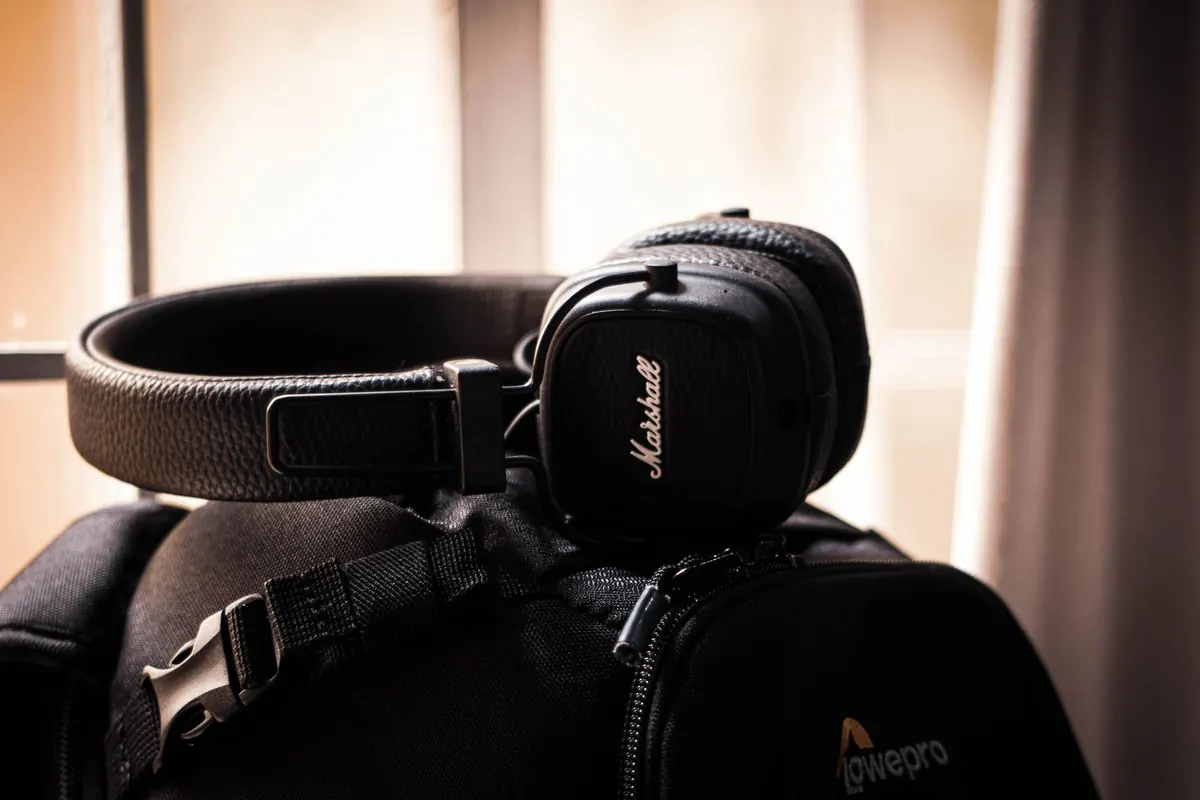
The $150 ceiling is a strange place to shop for headphones. Spend half that and you give up multipoint, app support, and any noise cancellation worth switching on. Spend double and you get nicer materials and smarter ANC, but the gain in daily usefulness is smaller than the price gap suggests. Between roughly $80 and $150, the essentials are all here: cancellation that quiets engine drone, battery life measured in days, and Bluetooth that can hold two devices at once.
What you cannot get at this price is everything at once. Each model below gives something up, usually call quality, occasionally comfort, sometimes both. These five are the ones worth considering, judged on the four things that actually shape a commute or a study session: sound, comfort, battery life and microphone performance.
The five contenders
Sony WH-CH720N
The lightest pair here, and it shows in your hands: hollow-feeling plastic, no folding hinge. It also uses Sony's V1 processing chip, borrowed from the flagship line, so the cancellation handles bus and train rumble better than its price suggests. Rated for 35 hours with ANC on, with multipoint and Sony's app EQ. No LDAC, and the microphone is fine in a quiet room but not on a breezy street corner.
Anker Soundcore Space One
The most flexible pick. LDAC support, multipoint, adaptive cancellation, and an app that includes a hearing-test-based EQ profile alongside a manual one — handy, because the default tuning leans hard on bass and the treble gets sharp at loud volumes. Anker rates it at 40 hours with ANC on, 55 with it off. Calls are clear indoors; outside, voices start to sound processed.
JBL Tune 770NC
Battery is the headline: up to 70 hours with ANC off, closer to 44 with it on. It folds flat, which matters if you're stuffing it into a backpack between lectures. Multipoint works well. What you trade is cancellation strength, the mildest of this group, and codec support, since there's no LDAC. Sound is punchy and V-shaped, which suits pop and podcasts.
1More SonoFlow
Often the cheapest of the five and the best value for sound alone: a fairly neutral tuning, LDAC, app EQ, and a rated 70 hours with ANC off. Cancellation is gentle, the kind that softens a fan or an air conditioner rather than erasing a train. The microphone is the weakest here. Fine for a quiet study room, frustrating on a busy platform.
Edifier WH950NB
The best-built pair in this group, with denser pads, a proper carry case, LDAC, hi-res support and multipoint. Cancellation is stronger than the price suggests. Battery is rated up to 55 hours with ANC off, and it drops noticeably once cancellation and LDAC are both running. Slightly heavier than the Sony, but the padding distributes it well.
Sound: what actually separates them
At this price the drivers are rarely the problem. Tuning and codec support are. Two of these five support LDAC, which can carry more data over Bluetooth — but only on Android, and only if your streaming tier and your ears can tell the difference. On an iPhone you get AAC either way, so don't pay extra for a codec you can't use.
Two things matter more than any spec sheet. First, fit: a proper seal around your ears improves bass and makes cancellation work, because ANC relies on blocking what reaches the microphone. Second, the app EQ. Every model here has one, and five minutes of cutting 200 Hz and lifting the upper mids usually does more for sound quality than a step up in price.
Comfort and fit for long days
You will wear these for two hours at a stretch, so weight and clamp force decide whether they survive the semester. Check four things before buying:
- Weight: under about 250 g is comfortable for long sessions; the Sony is the lightest here.
- Clamp: firm enough to seal, loose enough that your temples don't ache after an hour.
- Pads: they should sit around your ear, not press on it. Shallow pads hurt within 30 minutes.
- Glasses: thick temples break the seal and quietly kill your bass and your ANC.
If you can try a pair in a shop, do it. Fit is personal in a way that no review can settle for you.
Battery life: read the fine print
Manufacturer figures assume moderate volume and, often, cancellation switched off. Real use eats into them:
- ANC on can cut runtime by a quarter or more.
- LDAC drains faster than AAC or SBC.
- Cold weather shortens battery life, which is worth remembering in winter.
- USB-C quick charging helps — a short top-up often buys several hours.
All five charge over USB-C. Expect capacity to fade gradually over a few years of daily cycles; that's normal for lithium batteries, not a defect.
Call quality: where budget pairs fall apart
Every model here sounds acceptable on a quiet call. None of them beats a phone held to your ear in wind or traffic. Beamforming microphones are good at lifting your voice above steady background noise like an engine, and bad at handling gusts or a crowded cafeteria.
Practical workarounds: take important calls indoors, keep the microphone side away from the wind, and use your laptop's mic for long meetings if the headphones are only for listening. If calls are your priority, test this early — it's the one feature you can't fix with EQ.
Which one to buy
- Best all-rounder for commuting: Sony WH-CH720N — light, strong ANC, dependable multipoint.
- Best for tinkerers: Soundcore Space One — the app and EQ options reward a bit of fiddling.
- Longest battery: JBL Tune 770NC — charge it weekly, not daily.
- Best value sound: 1More SonoFlow — balanced tuning at the lowest price, weakest mic.
- Best build and comfort: Edifier WH950NB — the pair that feels like it cost more.
If you spot an older Soundcore Q30 or Q45 discounted, they remain solid alternatives with similar trade-offs.
A five-day test plan before you commit
Buy from a retailer with a clear returns window, then use the headphones properly before the window closes. Day one: wear them for two hours straight and note where they press. Day two: take a call outdoors. Day three: run the app EQ until speech sounds natural to you. Day four: use them for a full study or work session on one charge. Day five: decide.
Fit problems don't fix themselves, and a microphone you dislike on day two will still annoy you in month three. One last note worth taking seriously: keep the volume at a level where you can still hear traffic and announcements, and if you notice ringing or muffled hearing after a long session, have it checked by a hearing professional rather than waiting it out.
Photo: O'NEIL GONZALES / Pexels
Related posts
More stories you’ll love reading